Total Pageviews

Showing posts with label Advent 1. Show all posts

Monday, November 30, 2020

Advent, first Sunday - "When we Ask God to Change the World" (Isaiah 64:1-9)


watch it here - https://www.youtube.com/watch?v=zo-Y_zN_bV4

November 29, 2020

            I don’t need to cite any examples.  I can just say, the year 2020 has been weird, unique, forgettable, and one we’ll always remembers.  Few people will look back on it fondly. 

            There’s no way to track this, but if there were, I wonder if we could measure how often people prayed in 2020, and if, as things got worse in the world, people’s prayers increased in intensity and frequency.  And, I wonder what that measurement would look like compared to other years.

            Every year, life falls apart for some people.  Pain – physical, emotional, financial, any kind of pain – spurs a desire for change. 

God, please bring some money.  I’m tired of wondering how to pay for groceries and rent.

God please help my body to respond to physical therapy.  My body hurts.  I want to be healthy again.

God please fills this hole in my heart.  The divorce has broken me.  I feel empty.  I don’t want to feel this way anymore.

When life is going great, we thank God and hope the good times will continue. Or, caught up in our happiness, we forget about God.  But those who hurt pray. Pain produces prayers – prayers for change.      

            If I had to guess, I’d say as we close out 2020, more people are praying for change than in other years at this same time.  We want things to be different, better.  We want life to open back up.  We want Thanksgiving and Christmas and New Year’s.  We want parties and family.  We want change. 

            Isaiah 64 is a prayer for change.  Isaiah chapters 56-66 function as a unit.  Some experts refer to this as “3rd Isaiah,” set after Israel has returned to the land from exile.  Imagine the awkwardness and uncertainty when that change we’ve prayed – reopening – comes.  Imagine life after the pandemic.  As much as we yearn for it, it will be fraught with economic uncertainty, questions about vaccines, and whether or not we can hug each other.  What will the new normal be?

            In Isaiah 56-66, the people had returned to the land.  But Jerusalem with rubble everywhere, the aftermath of the Babylonian destruction, sat depressed in varying stages of rebuilding.  The sin God’s people committed that led God to allow defeat and exile to happen lurked at the edges their consciousness.  Would they again disobey the Lord?  Would God punish as he had before? 

            Isaiah 64 is a prayer for change.  Maybe hearing that we think, Isaiah 64 provides the words we need to lift before the Lord.  This can be our prayer.  Be careful!  Better than careful, be mindful.  God hears our prayer and takes them seriously.  We should lift them up seriously.   

            Lord, I want to see unity in our land.

            Lord, my body is broken.  I want to be healed.

            Lord, I fear catching a disease.  I want to know I am protected.

            Each is truly a legitimate prayer for change. I encourage these prayers.  Talk to God.  Take what matters in your life before the Lord.  No one loves you like God does.  God wants to hear from you.  God wants you to pay attention to Him.  God wants you to worship with energy, sing your heart out, and throw yourself fully into your worship, your Bible reading, your prayers, and thoughts.  I would go so far as to say God wants a relationship of intimacy with you.

            Make no mistake though.  God is still God.  Listen to the opening of the prayer in Isaiah 64.  “O that you would tear open the heavens and come down, so that mountains would quake at your presence … so that nations would quake at your presence.”

            How often are the prayers we lift requests for life to go back to the way it was before COVID hit?  Or, if you life was kind of lousy and really hard before COVID, last year at this time, maybe you prayed for a good, prosperous, healthy, successful American life.  O Lord, I want the nice house, the best health insurance, the full kitchen cupboard, and a little extra to go on a nice vacation.  God loves home-owning, full-bellied affluent people; no question about it! 

Yet, think about it.  If you’re struggling and praying for your life to be like the person who appears to be struggling less – that’s not a prayer for change.  That’s a prayer for you to live on the good side of how things are in the world right now.  It is asking God to make it so we enjoy the best this life has to offer.  Isaiah 64 utters words at an entirely different level.

To pray this post-exilic prophet’s prayer is to seek change in the fabric of society, an absolute altering of the world as we know it.  Isn’t that what happens when “mountains quake?”  Forget COVID, forget Trump v. Biden, forget all the weirdness of 2020 we actually want to forget but cannot.  Isaiah asks for fire from heaven that makes the waters boil and the rulers tremble.  Do we want to pray that prayer?

What is God doing?  I have heard that question asked a lot this year.  What is God up to?  Setting aside the myopic narcissism in supposing that what happens in our little lives is any kind of indication of God’s intent or activity, it is a natural thing to wonder.  God, what’s going on here, and, where have you been?

Again, God invites us to ask.  If you take anything away from this sermon, take away the assurance that God welcomes your queries.  God wants to hear from you.  God wants to hear from all of us.  God wants to connect at the most seemingly insignificant details in our lives.  Just know the Isaiah 64 is also much bigger than what we can see. 

Verse 4 – “From ages past no one has heard, no ear has perceived, no eye has seen any God besides you, who works for those who wait for Him” We bring all our prayers, concerns, worries, and hopes.  We lift it all to God in prayer.  Then, we wait on God with that question nibbling away at our faith.  God, what are you doing?

God will answer.  How we receive that answer will be colored by how approach God.  Isaiah approached in a spirit of repentance.  “We have all become like one who is unclean, and all our righteous deeds are like a filthy cloth” (v.6).  Isaiah stated the sinful condition of the people, and tries desperately to turn from that to the Holy God who despises sin and will not tolerate it. 

Isaiah recognizes that while it hurts to face in God with our sins dripping all over us like we’ve fallen into a muddy pond right before entering a formal ball, it is worse to turn away from God, and even worse than that to think God has turned away from us. 

Do we, as Isaiah did, see our own condition, our filth next to God’s pristine holiness?  I maintain that the problems of 2020 and in many cases the problems we face regardless of when we face them are magnified by our own shortsightedness, selfishness, and greed.  COVID is the not worst evil we’ve face in 2020; human sin is.  When we pray for change, will repentance be a part of it? 

Will we, as Isaiah did, say to God, “You are our Father; we are the clay, and you the potter”?  The potter gets to mold the make the clay as she pleases.  The clay doesn’t make suggestions.  Will we be clay in God’s hands?  Will we acknowledge our impurities alongside God’s perfection?  Will we say to God, make of me what you will?

Let’s bring together all that’s been raised as we take the prophet’s words and try in some fashion to raise them to God as our words. 

·       We want the world to change or at least our experience of it to change.

·       We agree that Isaiah was onto something in including repentance as a part of his prayer.  So, we also repent.  We name our own failures and shortcomings.  Having confessed, we turn away from sin and turn to God. 

·       We trust that God wants us to pray and hears our prayers.

·       We believe God can and will answer.

·       We wait.

We are left with the thought that we still aren’t quite sure of what God is doing in all this.  Take comfort.  Not knowing is included in the waiting.  Throughout the Bible God’s people have earnestly hoped God would act, then failed to recognize when God did act, because God’s response wasn’t what they expected.  Moses, Job, Daniel, Ezekiel, John the Baptist, Peter; they were surprised when God showed up, and in most cases, they were watching for him! 

“O that you would tear open the heavens … so that mountains would quake and kings would tremble at your presence.”  O that you end the pandemic, quiet the political fighting, bring justice to the victims of injustice; God, come do something!  Will we watch for God’s response?  When it comes, will we see it?

Advent is a time of waiting.  To answer all the questions on the first Sunday would be to skip to the end of the story.  Instead, imagine, if God tore open the heavens and brought the changes you’ve prayed for, what would that look like and sound and feel like?  To seek God and ask God to act demands tremendous faith. 

How does the birth in the manger signal that God is at work in the world?  Here’s the homework.  Spend significant time contemplating how the coming of Christ changes the world at the end of crazy pandemic 2020.  How does the coming of Christ change your life?

AMEN


Monday, December 3, 2018

God's Way, the Way of Hope (Psalm 25)


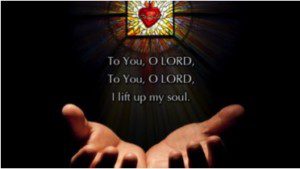
Image result for psalm 25 Advent 1


First Sunday of Advent, December 2, 2018

In Psalm 25, the singer appears to have had enough of life lived by his own wits.  “To you, O Lord, I lift up my soul. O my God, in you I trust” (25:1-2a). He speaks of enemies and appears to fear the power of those enemies he is sure hate him.  In my own life, I am blessed to say I don’t have specific people I cite as enemies. I don’t view Muslims as my enemies. Most are not terrorists and the encounters I have had with Muslims in Ethiopia, in Egypt, and in here in triangle have been very positive.  No, Muslims are not my enemies.
Nor are unbelievers and unchurched people.  I have a lot of friends who don’t go to church at all and are unsure of what we do here.  Certainly their worldview is different than mine. But, they love their kids. They are friendly people.  I believe they need Jesus and are lost without him. But, I don’t count them as enemies.
Petty rivalries, family conflicts, disputes with neighbors; none of these amount to anyone I would describe as ‘enemy.’  Maybe you have specific people in mind when you hear that word. I don’t. But, I have had many moments when I have prayed that prayer uttered by the singer of Psalm 25.  “To you, O Lord, I lift up my soul. O my God, in you I trust.” Pressure in life builds, stress mounts, and I feel I cannot meet all my responsibilities or handle all that life throws my way.  With Christmas, the most materialistic of holidays looming, shopping and parties and expectations add financial strain and demands on our time to the list. Yes, I bet many of us find ourselves with the need to lift our souls to the Lord.
The singer has something specific in mind.  Do you bark orders at God? You and I do, if we take the words of this song and sing them as our own.  Three times from verses 4-5, we sing it. “Make me know your ways, O Lord; lead me in your truth, and teach me.”  Ways.  Truth. Teach me.  Then, verses 8-10; we know the Lord is good and upright because He instructs sinners, directing them away from sin to God’s way.  “He leads in what is right and teaches the humble his way” (25:9). When we keep his decrees, we are on God’s path, and that path is unfailing love.  
This singer, originally David, perhaps, and then the community that canonized his words for worship - the singer is not bashful and is not playing around.  As if God needs reminding, the singer says, “Be mindful of your mercy, O Lord” (v. 6). Remember me. Forget my sins. Remember your love. Remember me. That’s Biblical prayer.  He sets the course he wants God to take. He wants God to make sure he, the helpless sinner, is rescued and set in God’s way.
As we “do” the holidays, are we on God’s way, in-step with God?
Or, is the world out of step?  Have we along with the world around us, lost a deep sense of the way of God?  Over and over and over, this Psalm invites any who would sing it to sing it directly to God.  We can do that. The Bible makes it plain here and in many places. At any point in life and especially when life is falling apart, we can sing and pray and shout and cry to God, and we expect God to hear us and respond.  If this Psalm is our cue, then when we seek the Lord, what we’re asking is to be gently guided back onto the way of God. We pray this because the way of God seems to be the best way to live, the only way.
Signs that the world, and maybe us with it, are falling away from God instead of walking joyfully hand-in-hand with God are all around.  The lostness of the world is on display in every direction we look. I heard of a high school student passing out brownies that his classmates gratefully accepted and hungrily gobbled up, not knowing they were laced with marijuana.  Regardless of your views on the efficacy or evil of this drug, it’s deceptive to give it to people without their knowing.
A more drastic sign of how lost the world is:  The porn industry is one of the most profitable in our country and in the world, a multimillion dollar business that degrades the consumer and the producer.
Even more drastic, a sign of how evil spills over humanity, bringing and sorrow with it: the “caravan.”  A throng of desperately poor people are stuck in limbo along the border of the United States and Mexico. Families seeking the American dream and escape from dangerous, oppressive situations are met with closed doors and tear-gas.  Whatever your view of immigration is, this is evil.
And this: I recently read that 6,000-10,000 churches in the United States close their doors every year.  In a world run amuck, the church is to be the body of Christ bearing witness to the salvation people have in Jesus. Yet, more churches die than thrive.  Six thousand-10,000 American churches close their doors permanently, every year. ‘To you, O Lord, I lift up my soul; ... make known to me your ways.”
Perhaps worse than churches dying are Christians dying.  In Nigeria, it is common place for Christians near the North to be physically assaulted and rendered homeless or murdered by the Boko Haram Muslim terrorist group.  Even more deadly are the Fulani sheep herders who live all over the country, who are Muslims, and now, thanks to Boko Haram, are armed with assault rifles and willingly use them without warning against Christians.  Our Nigerian brothers and sisters in Christ will celebrate Christmas as we do. As they do so, they will pray Psalm 25 with an urgency we might not recognize. “Do not let our enemies exult over us,” they pray, singing the Psalmist’s words.
Churches die because Americans aren’t interested enough to attend.  Christians die because some deranged people in Nigeria decide to kill them.  Both are signs that the world is falling away from God.
Where’s the hope?  We might point to China, where Christianity is spreading like a wildfire.  Similar stories come out of Korea and India and South America. Rejoice! The world will never be without a witness testifying to the salvation God gives in Christ.  Rejoice!
But what about the weary Nigerian church?  What about the impassive, disinterested American church?  Or, the great cathedrals of Europe that stand empty, museums pointing to a now dead age. Is Christianity here destined to be a thing of the past?  We serve a living God, one more powerful than any sinful temptation, one able to turn back the seeming inevitability of history. If we didn’t believe in God’s great power, we wouldn’t waste our time in worship and prayer, would we? But we do believe.  Yes, the growth of the church in the global south is a cause for hope. Yes, though churches are dying America, there are still some American churches thriving. These stories are testaments of hope.
The greatest testament of hope is the reality of God himself.  That was all the singer had. Verse 15 - “My eyes are ever toward the Lord, for he will pluck my feet out of the net.”  David held this trust when King Saul tried to run him through with the spear and later when his own son Absalom raised an army and went to war against him.  David’s hope always came back to his unwavering trust in the power and love of God.
David never got to see God come in human flesh, in Jesus of Nazareth.  We know God in Jesus - the ultimate expression of God’s love. Jesus is our model for walking in the way of God. Assessing the lostness of the world, we know our hope is in Christ.  Whether that hope is for revitalization in a ho-hum American church, or for life itself in a threatened Nigerian church; or, for hope in a desperate crisis you are facing in your own life; the hope is Christ who guides us back to the way of the Lord.
Just a few days before he would be arrested and crucified, Jesus was in Jerusalem in the temple district with his disciples.  Taking in the grandeur of the temple and the hypocrisy of the worship, his disciples wondered when God would act dramatically to turn history around, in their favor.  Jesus warned that the moment would come and would mean judgment because God punishes sin. God casts out those who reject His way.
But, as terrifying as God’s wrath might seem, hope comes with it because Jesus sets things right.  Our sins are nailed to his cross. He takes our death on himself. He takes his resurrection and shares it with us.  In the sermon he gives his disciples there in the temple’s outer court, he promises, “Heaven and earth will pass away, but my words will never pass away” (Luke 21:33).  That’s our hope: the promise of Jesus; the promise that he will guide us into the way of God and the way of God is the life we want to live.
As we prepare our hearts for the Lord’s supper, bring to mind the struggles in your life, or the signs of lostness in the world that threaten to diminish your hope.  Let this prompt you to cry out the words of the Psalm. “To you, O Lord, I lift up my soul.” And lift your soul to God. Bring your burdens to God. The Holy Spirit will help you, God will take your load, and Jesus will tenderly, lovingly open before you life lived God’s way, the way of hope.
AMEN

Monday, December 4, 2017

Hope for the Long Walk


Hope for the Long Walk (John 4:46-54)
First Sunday of Advent: Hope
Rob Tennant, HillSong Church, Chapel Hill, NC
Sunday, December 3, 2017

Desire.  I wonder what this word brings to your mind.  Desire is something one absolutely must have, a “strong feeling of wanting something very badly.”[i]  Craving, longing, and yearning, are synonyms.  I am craving the sweets on the dessert table.  My grandfather died in 2006.  I am longing to play golf with him, or hear his lovable growl as he putters around the house.  I love my family, my work, my life, and yet deep inside, I find myself yearning for more. 
We meet a “royal official” in John 4:46.  The notes in the Oxford Annotated Bible say this was a Gentile military officer, a Roman stationed in Israel, in the city of Capernaum.  It sat right on the coast of the Sea of Galilee, but the official actually met Jesus in Cana which was as far from Capernaum as the Raleigh-Durham airport is from here, except in that time, you’d walk or go by mule.  He walked that 15 or so miles to meet Jesus because he desired something deeply.  His son was ill and the best doctors around were powerless to help.
Roman authorities for the most part looked on Jews with condescension.  They looked down on everyone that way.  They were the mighty Romans after all.  Yet he comes to Jesus begging.  We all come to that point in life.  We desire something and there’s no way we’ll get it.  So we beg God to deliver.  He didn’t know Jesus was God, but the talk of Jesus’ miracles had spread throughout Nazareth, Cana, Capernaum, and other area towns.
The futility of desire led to desperation, maybe even despair.  This man of power was on his knees begging a carpenter turned itinerant teacher-preacher for a miracle.  He prostrated himself before a religious man of a religion he didn’t even follow.  What dreams do we have that become all-consuming desires that make us desperate to the point of despair? 
“I hope all is well with you.”  I write that in notes or emails I send to people I haven’t seen in a long time.  My desire, when I think about people I love, is that all would be well them.  I hope my friends and family can flourish in their careers and in their relationships.  This week, one of my best friends, Kevin died.  He was young – 39.  He had been married 1 month and 6 days.  He had been a senior pastor for about a year after many years in youth and college ministry.  He was just starting out. 
Last Sunday, he and his new wife Jackie posted pictures on Facebook of them going out to cut down their first Christmas tree as a couple.  They brought it home and decorated it.  Over the last month they’ve posted a flurry of wonderfully happy photos: wedding pictures, honeymoon photos, and pictures of them in the house together.  The Christmas tree pictures were posted Sunday night.  Monday morning, Kevin, a life-long weightlifter went to work out.  He collapsed.  How many years will it be before Jackie can enjoy hanging ornaments on a Christmas tree again?
Jesus and the desperate Roman official talk past each other.
“Please, miracle worker, heal my son.”
“Unless you see signs wonders you will not believe,” responds Jesus.
The man doesn’t care about believing!  Urgently he says, “Sir!  Come down before my little boy dies.”
When Jesus mentioned “signs and wonders,” I don’t think he was talking to the man.  His words came in response to the man’s plea, but I think he was actually talking to the crowd around them and to future generations who would live this story through reading John chapter 4. 
“Come down before my little boy dies.”
Finally Jesus looks at the man.  “Go.  Your son will live.”  And the man believed Jesus, turned around, and start the 15-mile trek back to Capernaum.  He had to stop for the night, then pick up the journey the next day.  Everyone in his household – wife, children, slaves, colleagues, neighbors – everyone knew why he took the trip to Cana.  Now, here comes a servant, smiling, weeping with joy, greeting him on his return. Breathless, he says, “Your son is alive and recovering from the illness.  He’s going to be well.”
“When did the healing begin?”
“Yesterday.  One in the afternoon;” the very hour Jesus told him his child would be fine. 
And John writes, “So he himself believed, along with his whole household.  Now this was the second sign Jesus did after coming from Judea to Galilee” (4:53).

Do we dare believe that hope is real?  Do we dare hold the hope that we sing about in Christmas songs and promise others when we tell them the good news found in the Christian faith?
When Jesus initially responds to the man, “Unless you see signs and wonders you will not believe,” he sounds annoyed.  It  is as if Jesus is fed up with people demanding proof.  Yet at the end of the story, the narrator tells us this the second sign and we know there will be more to come.  Jesus tolerated the need for signs because he could see how weak our faith is even as he could see how much we need faith.
He commented on the frailty of people’s belief.  Then the man made a decision.  Jesus told him the boy would be fine and he believed.  At least he believed in the sense that he turned around and walked back to Capernaum.  As he trudged those 15 miles, was he scared out of his mind?  Did he walk along desperately repeating, “God please let his words be true?   God please let his words be true.   God please let his words be true.”  This man moves from the desire for his son’s healing to desperation to decision.  He decides to do what Jesus says.  In that decision to walk back to Capernaum, John writes he, “believed.”  His belief came in a decision to obey Jesus and accept his word.
Then, the servant tells of the healing and the man realizes it happened right when Jesus said, “Your son will live.”  Again in verse 53, John writes that he believed, only this is different.  This is the belief of a man who has seen God act.  The first instance was the belief of a man who hoped God’s word could be trusted.  At the end of the story we see the belief of a man who knows he can count on God. 

I mentioned Kevin who died just a month after marrying Jackie.  She has to go on with life.  She’ll have more Christmas trees to decorate.  It may be years before she has the strength to do it.  Healing will take time, but long before she met Kevin, she made the same decision this Roman official made.  She learned the story of God-come-to-earth, the baby in the manger.  She worshiped in churches where she heard preaching about the death of Jesus on the cross for her sins and for the sins of the world.  She has worshipped the Risen Lord Jesus on Easter Sunday.  Just as the Roman decided to believe Jesus and to take that long walk back to Capernaum, not knowing, she long ago decided to believe Jesus is the Savior.  She put her trust and hope in him. 
Now she’s on the long walk.  Now, she discovers whether the decision to believe will be confirmed by the presence of God in her life.  This story of the boy healed in John chapter 4 is no help to her.  Nor is it a real help to you if you are going through a crisis or loss in your life.  The idea that Kevin is with Jesus now, or resting peacefully awaiting resurrection, which is assured, is of no help today.  Kevin will be resurrected.  Jackie will be.  I will be.  That doesn’t help today.  Today, she’s really, really sad. 
At times the long walk is that way.  It’s long and hard and sad.  The shadows are so deep, we can’t see the sunshine around the bend.  This is where we need to remember something very important about the hope we have in Christ.  Yes, in Jesus God redeems the world.  Our sins are forgiven.  With his victory on the cross and resurrection, our hope of eternity spent with God is guaranteed.  But, there is more. 
The resurrected Jesus departed bodily but left behind the Holy Spirit of God.  In addition to forgiveness and new life and the hope of eternal life, we are promised the Holy Spirit.  That’s God with us, all the time.  Jesus speaks explicitly about this in John chapter 14.  He calls the Holy Spirit the “Advocate,” which could also be translated “Helper,” or “Comforter.”  In upcoming days, Jackie is going to meet God the Comforter and God will stay by her on every step of the long walk.  I pray that she will have her moment, where, like the Roman official, she realizes Jesus spoke truth.  I pray for Jackie that as she steps out on the long walk, the Holy Spirit will help her feel God’s presence.  God was with Kevin right to the end just as Kevin is with God now.  And God is with Jackie now, when hope seems so far away.  I pray she will allow herself to feel hope, of life with God.
I pray this for you too.  One of our long-time members, Marion Charles, lost her son Roy.  He was 65 and died during heart surgery. Marion is many steps further along the long walk to Capernaum.  She knows sadness, but she has seen God work.  Over and over, she has experienced the hope to which she steps. 
Maybe you have as well.  When you sing of hope at Christmas, it is a hope you know. 
Maybe you’re where Jackie is and with each step, you have to force yourself to believe.  With each painful step you pray “God please let hope be real.   God please let hope be real.   God please let hope be real.”  I promise you, you’re not on the walk alone.  God’s church walks with you.  God’s Holy Comforter walks with you.
Maybe you have other struggles or other things on your mind as you walk through life with God.  The promise of hope is assured.  God can be trusted.  Make the decision to believe.  Then walk into that belief.  We all can because the hope of the Gospel is that God the Comforter has come and is with each of us, the Holy Spirit walking the long walk with us.  We do not walk alone, but with God, every step.
AMEN

Sunday, December 3, 2017

Persistently Seeking Hope in God


The Nutcracker music is playing as the day winds down.  It is 7:42PM on the first Sunday of Advent, December 3, 2017.  This morning in worship, we had our regular English congregation, many Spanish-speakers from Iglesia del Amor de Dios, Karen-speakers (the Karen come from a Burmese tribe), and many Chinese-speakers.  In our Chapel Hill, NC, these worshipers from all over the world came together in Jesus’ name.  There were at 130 of praising the Lord together.
Yesterday, in Arlington, VA, I was in a gathering of more than 500, and just as ethnically diverse.  My good friend Kevin, a pastor in Luray, VA, and someone I mentored 12 years ago when he was getting started, died this past week.  He has cardiac arrest while weight-lifting, collapsed, and died.  He was just 39.  The mood at our worship service this morning was joyful, festive, happy.  We had a big potluck after worship, with tables decorated for Christmas.  The mood yesterday at Kevin’s funeral was somber, heavy. So much sadness.  Kevin’s mother was disconsolate. 
Now, on whatever music loop that’s playing, it’s shifted from The Nutcracker to ‘Star of Wonder.’  It’s the typical background music of Christmastime.  Our house has lights on the outside.  Our tree is up.  Our decorations are around.  I sit and reflect upon conflicting moods: joy from this morning’s worship, and sorrow from yesterday.  The first Sunday of December is, along with Easter, the highpoint of the year at our church and this morning was no exception.  Yesterday, grieving my young friend and protégé, was one of the lowest lows I’ve had in a while.  There’s a weight to grief and it has settled on me even as feel the true of joy of Christ’s birth.
Facebook has given me perspective.  Memories popup on Facebook.  The memory to pop up just now was from 2012, when I posted my sermon for the first Sunday of Advent that year.  The theme was the same as this morning – our search for hope.  The path for that search was different then than today.  In 2012, I lamented the divisiveness of politics (Obama v. Romney), and the specter of terrorism that hangs over us.  In spite of the negative waves emitted by politics and violence, I promised our church that God is present and can be trusted. 
This morning, 2017, I took our church through Kevin’s story and his parents’ and young wife’s sorrow at his death, and I invited the worshippers to contemplate their own losses.  Just as in 2012, I promised that God is present.  God is with us and God’s promises can be trusted.  I stood before the congregation this morning and said that.  I did the same in 2012 and many, many other occasions throughout my 20+ years preaching the Gospel. 
Am I right?  Is God’s here?  Can God be trusted?  I think the answer is ‘yes.’  I am sure it is.  But tonight, I feel so tired.  It’s more than fatigue.  It’s not malaise, though it feels a bit like that.  What heaviness is wearying me?  Grief?  Probably.  The lights in the house shine softly, warmly.  Right now, my kitchen table feels like a peaceful place.  But my tiredness is not a peaceful feeling.  What is it? 
Yes, I am sure that God is present and God’s presence is a source of unfailing hope.  Yes, I am sure this is so.  I don’t feel it at the moment, but feelings can’t usually be trusted.  At least mine can’t.  Yes, I will go on, year after year, preaching that God is here and God can be trusted.  I say it because it is true. 
It is true. 

Right now, I’m just tired.  And that’s OK too.  I’m not necessarily OK.  But it is OK that I am not OK.  Because God is here.

Tuesday, November 28, 2017

Advent Hope


With the start of Advent, December, 3, 2017, our church, like many, gives attention to the Lectionary texts and to the themes of Hope, Love, Joy, and Peace.  The Lectionary is a series of prescribed readings that cover a three-year span.  Each week there is a Gospel, a Psalm, an additional Old Testament reading, and an additional New Testament reading.  There are several lectionaries.  I typically refer to the Revised Common Lectionary.
Hope, Love, Joy, and Peace.  Jesus brought each of these ideals to the world.  In him these words are realities that we live as we live our lives in Christ.  These came with his birth and in Advent we remember.  These come as we walk with Christ in our lives.  In Advent, we long for these things and anticipate. 
Us anticipating the story of Jesus’ birth  is not exactly like the way the creation anticipated his coming prior to when Joseph and Mary made their way to that stable.  We know the story.  But, it becomes new in our lives each year.  So Advent, for Christ followers, is really the start of rebirth as we once again reach for God even as God reaches to us in Christ and in the Holy Spirit.
Additionally, we anticipate the Second Coming of Christ.  When Jesus returns, as it is promised he will (Acts 1:11b), then we will see these value, these dreams – hope, love, joy and peace – in ways we have never seen them.  The qualities will be fulfilled as all things will be.  Thus our Advent is remembering and living into life in Christ and anticipating the fullness to come with his return.
The first week is hope. One of the reading is 1 Corinthians 1:3-9.  Verse 8 says, “God will strengthen you to the end, so that you may be blameless on the day of our Lord Jesus Christ.”  This verse and the longing for hope and the assurance of hope has hit me in a most unwelcome way this week.  One of my dearest friends, Rev. Kevin Ly, died suddenly while doing a morning weightlifting routine.
Kevin was a high school senior when I began as a pastor.  I was 27.  I stayed at that church long enough to see him go through school and he became our youth minister.  He was the first person I mentored in ministry.  We were linked at the heart – linked because we both heard God’s call so clearly.  Over the years, I have encouraged certain people in churches I’ve served to consider ministry.  It rarely leads to them becoming pastors.  I never had to encourage Kevin.  He was called, driven to serve the Lord.  I just had to give him opportunities, to stay out of his way, and to help if he needed it. 
Earlier this year, he got his first senior pastorate.  Then, October 21, 2017, he married his beloved Jackie. I don’t understand his death, just one month and six days after his wedding.  It doesn’t make any sense.  For my own sadness, I have needed that promised Advent hope – that Jesus fulfills everything.  I have needed the 1 Corinthians promise, “that God will strengthen you.”  I don’t feel strong.  I cannot imagine how Jackie feels and how Kevin’s parents and siblings and church members feel. 
For Kevin, I trust that 1 Corinthians Advent Hope promise.  In Christ, he will meet God blameless.  When Kevin sees God face to face, all of Kevin’s sins will be gone, covered and removed by Christ.  God will, smiling, look at Kevin and see Christ’s righteousness.  I am steadfast in my confidence of this hope for Kevin.  It doesn’t reduce my sadness.  But it does mean sadness is not the only thing I have.  There is sadness.  There is also joy.  Yes, it is possible to hold both at once.
Do you have troubles, losses, pain that you carry as Christmas approaches?  Let the Advent hope extend beyond Sunday morning to your heart and your mind and your life.  If you have sadness, it’s OK to sit in it.  In fact, that’s the right thing to do.  I don’t ask why because I don’t think there’s a good answer.  I don’t console myself with platitudes such as “Now Kevin is singing with the angels.”  I’m sad.  But, in my sadness, I have turned my eyes upon Jesus.  His hope washes over me.  His Holy Spirit sits with me in my sadness as long as I need him to be there. 

Are you sad or hurt or lost?  There is hope – real hope for you today.  It began with the child in the manger, grew through his life and teachings, and spread worldwide with the coming of his Holy Spirit and the growth of his church.  It grows as you grow in relationship with God’s Holy Spirit.  Turn your eyes upon Jesus.  He will strengthen you now and make you blameless when you meet God on the day of his return.


Monday, November 30, 2015

Fall on Your Knees (Mal. 3:7; Lk. 12:35-36)

Our youth pastor Nathan gave the sermon for the first Sunday of Advent.  If you'd like a recording of his sermon, contact our church office or email me.

Here are my thoughts on the text of Nathan's sermon.

     Writer Philip Yancey says he has met the most fulfilled, godly people among the poorest of the poor in prison cells, leper colonies, and inner city slums.  In these dark places, where daily life is survival, and just barely, he has encountered truly holy people who are indeed, very close to God. 
Yancey quotes author John Cheever who said, “The main emotion of the adult American who has all the advantages of wealth, education, and culture is disappointment.”[i] I don’t know how Cheever knows that.  I do, though, find the quote compelling. 
Is it true? 
You can test it yourself, this season, leading to Christmas.  As you shop for that new game system or that new I-phone or some other gift that will bring great happiness when pulled from under the tree and unwrapped, ask yourself, is this were happiness and joy are found?  The main emotion of the one who has everything is disappointment.
          I don’t know if that is true.  I know the world is wounded.  I know there is disappointment aplenty in our community.  There is as much disappointment as there is affluence.
          There is also emptiness. 
          My friend wrote a book which he sent to several of us to review.  In his writing, he identifies a worldview that has no place for God and that accepts that humanity has evolved from simpler life forms.  Millions of years ago, simple chemical interactions came together to produce life – single-celled organisms.  Over the eons, these beings evolved to more and more complex organisms up to the present day.  And today we have us, beings with self-awareness. 
          When we die, our bodies will decompose and eventually go back to the dirt from which we came.  My friend, Steve Davis, a pastor whose church is near Fort Bragg, calls us “dirt in transition.”[ii]  This is the worldview he’s describing.
He does not believe that.  He actually believes we are created beings.  Even if evolution is the process, it is a process God created and each one of us is made in God’s image. 
          But many people are materialists.  They cannot by way of empirical observation prove God’s existence, so they assume there is no God.  They not only accept that humans are “dirt in transition,” they are sure of it. 
In terms of meaning, this worldview comes up empty.  Our lives no meaning beyond what we come up with ourselves.  If the only meaning we have is what we or other humans create, it is totally arbitrary.  No matter what we desire, we are in fact just complex chemical compositions fated to die.

          So is that the human condition?  Philip Yancey cites Loren Eiseley a materialist who makes art out science.  Eiseley thinks that when we long for meaning, the idea that there is something more than the world we see, we are like frogs croaking through the night.  “We’re here.  We’re here.  We’re here.”[iii]  And we hope against reality that something out there notices. 
          This bleakness is in the Bible.  The book of Ecclesiastes opens by saying, “Vanities of vanities.  All is vanity” (1:2).  So for Christmas, buy the I-phone for your girlfriend.  Maybe she’ll be happy, at least until the next one comes out.   Then, well, buy the next thing.

          This disappointment and meaninglessness leads to all manners of catastrophe.  On a small scale, people who cannot afford expensive things are envious and disheartened because they cannot have what others have.  Those who can afford those things are disheartened and disillusioned because the expensive toys don’t bring any real happiness.  The longed-for fulfillment never comes.
          On a larger scale, the emptiness leads us collectively to create myths.  Some myths are couched in religious terms that lead us to accept lies or to join movements that wreak havoc, like terrorist groups.  Other myths wear the colors of patriotism.  In our country that is blended with the myth of the middle class American life.  That is where happiness lies.
          Well, no, not really.  This is not where happiness lies! But our advertisers and our politicians have become wealthy selling this myth.  We get convinced and we buy it all time and in bulk around Christmas time.   In longing for something more, meaninglessness and emptiness and disappointment lead women and men to, create the means of their own destruction. 

          What if the incarnation is God’s response to our desperate longing for something more? 

Incarnation is the word we use to explain God becoming human.  In the birth of Jesus, God entered the world in a new way.  God had always been and always is present.  Nothing is hidden from God. There is never a time when you or I are alone, unseen.  God always is with us and sees us.
          In the incarnation, God is present in a unique way.  God took on human flesh as a complete human being with DNA, with a growth process from fetus to new born, from toddler to adolescent to adult.  Jesus was as human as you or I are human. 
          What I am asking us to consider is this.  What if God doing that – becoming human – was God’s way of responding to our condition, a depression of utter meaninglessness?  What if God came in Jesus in order to show us who we are and who we can be? 
          This assumes that God responds to human beings.  I believe the Bible shows over and over that God is a responsive God.  And I think God’s ultimate response to human pain is God’s coming as Jesus.  If Jesus is God’s embodied response, God’s love embodied, then we are saying God does respond to us. 

          So what then? 
We are empty when we try to find meaning for ourselves.  God responds to impoverished souls by becoming one of us in order to show us love, to die for our sins, to overcome death in resurrection, and then to invite us to faith and life and relationship as we find ourselves in Jesus.  We have the condition and God’s response. 
What of it? 
          How do we respond to God’s action in Jesus Christ?  Chew on this.  We’re ontologically bankrupt.  We have nothing that brings significance.  Then God comes and fills us with joy and meaning and purpose.  What do we do? 
          The great hymn “O Holy Night” gives part of the answer.  In that hymn, we sing these words.
                   A thrill of hope, the weary world rejoices.
                   For yonder breaks a new and glorious morn.
Yes, in the coming Christ, all Heaven had broken loose.  Meaning?  Significance?  Purpose?  We clumps of dirt in transition are invited into an eternal relationship of love with the holy God through the action of God-in-the-flesh!  What do we do?  The song gives the answer.
                   Fall on our knees.  O Hear the angel voices.
                   O night divine.  O night when Christ was born

          We don’t kneel very much in our worship services.  Sometimes individuals will come during prayer time after the sermon, kneel at the steps and either bow their heads or look to the cross.  In these profound moments, the kneeling is a beautiful gesture done to show that the one praying knows who God is.  That’s what we say in kneeling.  I know who God is.  And I know it is not me.
          Through the mouth of the prophet, God said the following (Isaiah 45):
          22 Turn to me and be saved,
    all the ends of the earth!
    For I am God, and there is no other.
23 By myself I have sworn,
    from my mouth has gone forth in righteousness
    a word that shall not return:
“To me every knee shall bow,
    every tongue shall swear.”
24 Only in the Lord, it shall be said of me,
    are righteousness and strength;
all who were incensed against him
    shall come to him and be ashamed.

          Every knee shall bow.  I wonder if this word from Isaiah was on Peter’s mind the first time he met Jesus and saw a miracle.  He threw himself on the ground at Jesus’ feet in worship and in humiliation (Luke 5:7-9). 
I wonder if Paul had this Isaiah passage before him when he wrote in Romans 14:11 that every knee shall bow to the Lord. 
We find a similar sentiment in Philippians 2.  There, Paul is quoting what most scholars believe was an extremely early hymn, possibly sung within just a just few years of the resurrection.  The gospels weren’t written until probably the 60’s or later.  First Thessalonians was the earliest of Paul’s letters.  The hymn he quotes in Philippians 2 might be the earliest actual written Christian work.  In it is the declaration that upon seeing Jesus in glory, everyone will have no choice but to bow in reverence.  This will be an act of humiliation, not an act of faith.  Every knee shall bow.

What I am suggesting is that now, when our response to God is a faith response, not a response that comes after judgment, we choose to kneel.  There is precedent for making this choice.
Throughout the book Revelation there is kneeling.  First, the author, John of Patmos, falls at Jesus’ feet (ch. 1). Then the elders who spend their time in Heaven on thrones, exalted, threw themselves down before Him (ch. 4, 11).   The otherworldly “living creatures” we meet in the vision do the same (ch. 5).  These are instances of people as well as divine beings choosing to kneel and worship.

We find ourselves in a time when we can choose.  Today, God does not force us to kneel, to worship, to give homage.  God helps.  The Holy Spirit convicts us of our sins.  This means, the Holy Spirit shows us the extent to which our sins destroy our lives and the lives of those we love.  The Holy Spirit pricks our consciences, awakens our minds, appeals to our hearts, and opens our eyes.  But God does not force us to worship.  It is our choice and it is one I urge us to consider. 
The prophet Malachi offers a perfect word for us as we live in the days leading up to Christmas.  In Malachi, God says, “Return to me, and I will return to you” (3:7).  Then Malachi writes that the Lord took notice of those who revered Him and said, “They shall be my special possession on the day when I act” (3:17). 
When we kneel before Jesus Christ, we are saying, we are not God.  He is.  He is the source of hope because he brings forgiveness of sin, healing of wounds, restoration of hearts, and an invitation to life.  He gives us meaning when he shows us what love is and fills us with this love and nudges us to share it.  Also, in humility and with great compassion, we invites others to come to Him. 
We are not the source of own meaning.  We are not responsible for filling our own emptiness.  He accomplishes all of this in us when we look to the Lord and when we live in love. 
It starts when we follow the song’s prompt and fall on our knees.  No longer are we consumed with ourselves.  We die to self and find ourselves born again, made new, called into resurrection where our bodies are no longer clumps of dirt, but incorruptible, made of the stuff of Heaven. 

What is Christmas going to be for you this year?  Who can say?  Not me. 
But, here is what I can say.  Of all the things that fill the season, the shopping, the TV specials, the office and school Christmas parties, the decorating, and the other traditions, Christmas is a time of worship.  As you read this, say this out loud, over and over, until it rings in your heart.  Christmas is a time of worship.
          Look at your nativity set.  The lowly shepherds and the gathered magi together kneel before the baby Jesus.  As we worship this Christmas season, may we worship while kneeling before the glorified, risen Lord.  May we discover the joy and happiness that can only be found there. 
AMEN


[i] P. Yancey (2014). Vanishing Grace (Zondervan, Grand Rapids, MI), p.208.
[ii] S. Davis (2015).  Faith in Your Handwriting (self published, on Amazon Kindle reader).
[iii] Yancey, p.137.